
Top Esports Games 2025 by Prize Money — Biggest Prize Pools Ranked
Last updated: Nov 13, 2025 YTD
This updated ranking of the top esports games by prize money 2025 shows the biggest esports prize pools across official tournaments only, with totals listed in USD and rounded for easy comparison.
Part of our Esports Hub — learn how to join a team and enter tournaments.
Note: This guide covers official esports tournament prize pools by game, not fantasy pick’em contests, sportsbooks, or daily fantasy platforms.
Source: EsportsEarnings 2025 tracker. Totals reflect 2025 YTD official events per title.
Top Esports Games by Prize Money 2025 — Prize Pool Quick Sheet (YTD)
Fast reference for the top esports games by prize money 2025. Totals are year-to-date (USD) based on official events only.
| Rank | Game | 2025 YTD Prize Pool | Flagship 2025 Event |
|---|---|---|---|
| 1 | Counter-Strike 2 | $13,613,716 | BLAST.tv Austin Major 2025 – $1.25M |
| 2 | Dota 2 | $11,592,000 | The International 2025 (TI14) – $2.88M |
| 3 | Fortnite | $9,966,422 | FNCS Global Championship 2025 – $2.0M |
| 4 | Rocket League | $7,057,983 | RLCS 2024–25 Season – $5.0M |
| 5 | League of Legends | $5,279,202 | Worlds 2025 (Chengdu) – $5.0M |
| 6 | Apex Legends | $5,000,000 | ALGS Championship (Riyadh) – $2.0M |
| 7 | Call of Duty: Black Ops 6 | $3,690,000 | CDL Championship 2025 – $2.0M |
| 8 | Mobile Legends: Bang Bang | $3,500,000 | Mid-Season Cup 2025 (Riyadh) – $3.0M |
| 9 | PUBG Mobile | $2,303,067 | World Cup 2025 (Riyadh) – ~$3.0M |
| 10 | Street Fighter 6 | $1,328,480 | Capcom Cup 11 – $1.28M (1st: $1M) |
| 11 | VALORANT | $1,279,421* | Champions 2025 (Paris) – $2.25M |
| 12 | Free Fire | $1,010,000 | World Series 2025 – $1.0M |
| 13 | Pokémon UNITE | $866,000 | Unite World Championship 2025 – $500K |
| 14 | StarCraft II | $736,027 | Esports World Cup 2025 (SC2) – $700K |
| 15 | EA Sports FC 25 | $532,000 | FC Pro 25 Open Finals – $532K |
*VALORANT’s recorded YTD total is lower than its true 2025 payout due to late-calendar events and reporting lag, but rankings are based on available official data.
2025 Esports Prize Money Rankings (Game-by-Game Breakdown)
Here’s how the top esports prize pools 2025 shake out once you look past the headline numbers. Totals are year-to-date (USD, rounded) across official tournaments and leagues for each title.
-
🥇 1) Counter-Strike 2 — ≈$13.6M (2025 leader)
Counter-Strike 2 leads all esports in 2025 prize money with about $13.6 million awarded across its tournaments. This was CS2’s first full competitive year (replacing CS:GO), and it benefited from a packed calendar of international events. Instead of one gargantuan prize pot, CS2’s total comes from many S-tier and A-tier events – including two $1.25M Majors and regular stops like ESL Pro League and IEM. The BLAST.tv Austin Major and the late-year StarLadder Major both drew the best teams in the world, but dozens of smaller LANs and online tournaments also contributed to the total. For aspiring pros, CS2 offers a high-frequency, high-prize ecosystem: more chances to cash, more brackets to qualify for, and fewer “all eggs in one basket” moments compared to games built around a single world championship.
-
🥈 2) Dota 2 — ≈$11.6M
Dota 2 lands at #2 with roughly $11.6 million awarded in 2025. The centerpiece was The International 2025 (TI14), which featured a $2.88M prize pool – far from its old $30M+ peaks, but still one of the richest single events of the year. Team Falcons claimed the Aegis and about $1.14M for first place. On top of that, the Esports World Cup 2025 in Riyadh hosted a special Dota 2 tournament with a $3M prize pool, making it even more lucrative than TI itself. With only around a dozen major events feeding into that $11.6M total, Dota is still a “fewer events, huge stakes” ecosystem – the money is concentrated at the very top, and most of it comes from a handful of massive LANs rather than a wide base of small tournaments.
-
🥉 3) Fortnite — ≈$10.0M
Fortnite stays in the top three with nearly $10 million in 2025 prize money. Epic’s battle royale runs a constant conveyor belt of competitive events, capped by the FNCS Global Championship 2025, which put up about $2M on its own and paid $450K to the winning trio. Seasonal FNCS circuits, Cash Cups, Console Cups, and third-party LANs like DreamHack all add up, spreading prize money over thousands of players. Fortnite’s ecosystem is highly open and participatory: qualifiers happen in-client, and even semi-casual grinders can earn a bit of cash in smaller events while the pros chase the big FNCS payouts.
-
4) Rocket League — ≈$7.1M
Rocket League delivered about $7.06M in 2025 prize money, driven mainly by the RLCS 2024–25 season with a $5M global prize pool. The Rocket League World Championship alone featured around $1.2M, with hundreds of thousands going to the champions, and additional big-money events like the Riyadh crew battle LAN pushed the total higher. With more than 4,000 players earning at least something, Rocket League has one of the widest earning bases in esports – from regional RLCS splits down to community and collegiate tournaments – while still delivering serious six-figure payouts at the top.
-
5) League of Legends — ≈$5.3M
League of Legends shows about $5.28M in tracked prize money for 2025, but that number hides a key detail: LoL’s ecosystem relies more on salaries and revenue sharing than on giant prize pools. The big headline this year was Worlds 2025 in Chengdu, which jumped to a $5M prize pool – the largest in LoL history – with roughly $1M going to the champions and payouts all the way down the standings. Regional leagues (LCK, LPL, LEC, LCS, etc.) still award comparatively modest prizes per split, but those come on top of guaranteed org funding and player salaries. So while LoL doesn’t top the prize charts, it’s one of the most financially stable ecosystems for pros.
-
6) Apex Legends — ≈$5.0M
Apex Legends hits around $5M in 2025 prize money off the back of just a few massive events. The ALGS Championship and ALGS Mid-Season Playoffs (Riyadh) each put $2M on the line, with another $1M coming from the ALGS Open. This is a high-stakes, low-frequency scene: fewer than 200 players accounted for almost all the earnings, and if your team isn’t qualifying for those ALGS tentpoles, there’s not much prize money elsewhere. For players who do make it, though, a single deep run at a $2M championship can be a life-changing payday.
-
7) Call of Duty: Black Ops 6 — ≈$3.69M
Call of Duty’s 2025 title, Black Ops 6, delivered roughly $3.69M in prize money, anchored by the Call of Duty League (CDL) and its $2M Championship. The franchised CDL structure means just 12 city-based teams split most of that money, with Majors across the season adding a few hundred thousand dollars each. Unlike open circuits, almost all CoD prize money flows to a small group of salaried pros; Challengers tier events exist, but their prizing is modest. If you crack a CDL roster, you’re in a salary + prize bonus world rather than relying purely on tournament winnings.
-
8) Mobile Legends: Bang Bang — ≈$3.5M
Mobile Legends: Bang Bang (MLBB) posted about $3.5M in 2025 prize pools – incredible for a mostly Southeast Asian mobile MOBA. The big spike came from the Mid-Season Cup 2025 in Riyadh, which offered a staggering $3M on its own, with $1M to the champions. When you factor in the M-series World Championship and regional MPL leagues, MLBB’s competitive scene looks extremely healthy. It’s a case study in how regional dominance + external investment (SEA viewership + Saudi funding) can push a mobile title into top-10 global earnings.
-
9) PUBG Mobile — ≈$2.3M* (and climbing)
PUBG Mobile shows about $2.3M in 2025 prize payouts in current YTD data, but the true yearly total is higher. The PUBG Mobile World Cup 2025 in Riyadh carried a $3M prize pool, and the PMGC World Championship later in the year also targets around $3M – some of which may not be fully captured yet in public trackers. Add in regional pro leagues and invitationals, and PUBG Mobile’s real 2025 prize output comfortably clears the multi-million mark. Practically, it remains one of the most lucrative mobile esports, especially across Asia, the Middle East, and Brazil.
-
10) Street Fighter 6 — ≈$1.33M
Street Fighter 6 punched into the top 10 with about $1.33M in 2025 prize money – unheard of in fighting games before SF6. The vast majority came from Capcom Cup 11, which featured a $1.28M prize pool and made headlines by awarding $1M to the champion. Smaller Capcom Pro Tour qualifiers, Evo, and invitationals help round out the total. SF6 is still an open-bracket, grassroots-heavy scene at heart, but Capcom’s massive investment showed that even a 1v1 fighter can support truly seven-figure payouts for its best player.
-
11) VALORANT — ≈$1.28M* (under-reported)
VALORANT’s recorded 2025 prize total sits around $1.28M, but that’s clearly under-reporting what actually happened. The game’s flagship event, VALORANT Champions 2025 in Paris, alone had a $2.25M prize pool, with $1M to the winners, and mid-year Masters plus partner league finals added more six-figure pots. The gap comes from late-calendar events and tracking lag, not from a lack of funding. On the ground, VALORANT remains a structured, franchise-style ecosystem (VCT partner leagues + Ascension), where prize money is just one part of a bigger package that includes stipends and revenue sharing for partnered orgs.
-
12) Free Fire — ≈$1.01M
Free Fire clocks in at roughly $1.01M in 2025, almost entirely from a single event: the Free Fire World Series 2025, which put $1M on the line for its Global Finals. Earlier in the franchise’s peak years, Garena ran two $2M World Series per season; things have since consolidated into one big global championship plus smaller regional leagues. Free Fire’s scene is still huge in Latin America and Southeast Asia, but 2025 was a “one giant LAN + smaller feeders” model rather than a constant multi-million circuit.
-
13) Pokémon UNITE — ≈$866K
Pokémon UNITE quietly put up around $866K in prizing during 2025. The UNITE World Championship 2025 headlined with a $500K prize pool, while regional Championship Series events and Aeos Cups added the rest. Because Unite sits inside the broader Pokémon Worlds ecosystem (TCG, VGC, GO, etc.), its focus is on prestige and structured circuits rather than massive single paydays. Still, for a relatively young MOBA, a half-million dollar Worlds plus global qualifiers makes Unite a solid mid-tier esport with real money and a strong brand behind it.
-
14) StarCraft II — ≈$736K
StarCraft II refuses to die, pulling in about $736K in 2025 prize money despite its age and lack of new content. Almost all of that came from a single blockbuster: the Esports World Cup 2025 SC2 tournament, which offered a $700K prize pool and saw legends like Serral and Maru battle for a $200K first prize. Outside that one mega-event, the SC2 calendar was a mix of small online cups and regional tournaments with modest prizing. It’s basically a legacy esport sustained by nostalgia + one big sponsor – but when that sponsor shows up, the numbers are still impressive.
-
15) EA Sports FC 25 — ≈$532K
EA Sports FC 25 (formerly FIFA) rounds out the list with around $532K awarded in 2025. The main driver is the FC Pro 25 Open Finals, effectively the 1v1 world championship, which carried a $532K prize pool with a six-figure first prize. EA’s football esports have stayed consistent in scale: strong integration with real-world clubs and national teams, but relatively modest prize pools compared to MOBAs and shooters. Top players often sign with professional football clubs’ esports divisions, combining club support + tournament winnings into a solid career – even if the raw prize totals don’t match the giants higher on this list.
How to Start Playing Smaller Tournaments (Quick Guide)
All the games in this list look huge on paper, but almost every pro started in tiny online cups and local brackets. Here’s a simple path to go from “ranked grinder” to “actual tournament player.”
-
Pick 1–2 games and commit for 60–90 days.
Choose a main game (CS2, Rocket League, Fortnite, VALORANT, etc.) and stick with it instead of hopping around. If it’s team-based, also lock in a role or position so you’re always practicing the same job in matches. -
Join the right communities.
Find the Discords, subreddits, and in-game clubs where brackets are posted. Most top titles have beginner-friendly cups on platforms like FACEIT, ESL Play, Start.gg, or Challengermode — these are where you’ll find your first real tournaments. For step-by-step examples, see our guide on how to enter online tournaments. -
Play your first open bracket ASAP.
Don’t wait until you “feel ready.” Enter a small online cup or local event just to learn the process: check-in, lobby setup, reporting scores, and dealing with double-elim brackets. Even going 0-2 gives you way more info than another night of ranked. -
Treat small events like they’re big.
Warm up before matches, test your audio and ping, and read the rules so you don’t get DQ’d on a technicality. Play on stable settings (low input lag, consistent FPS), and if you can, record your POV so you can review later. Need gear help? Check our Best Gaming Accessories guide for starter setups. -
Review one thing after every bracket.
After you’re done, pick one clear improvement: crosshair discipline, rotations, comms, nerves, whatever actually cost you rounds. Jot it down in a tiny notes file or Google Doc and focus your next week of practice on fixing that single weakness. -
Start building a simple player profile.
Track your rank, roles, and tournament results (even “Top 16 in 32-team weekly”). Add a couple of raw highlight clips showing real in-match decisions. This makes it much easier to join a team later because you can show organizers exactly who you are and what you’ve done. -
Move into teams, leagues, and qualifiers.
Once you’re comfortable in weeklies, look for beginner teams or “LFT” posts in your game’s Discords. From there you can step into low-tier leagues, college/high-school circuits, and open qualifiers for bigger events. If you’re not sure how to make that jump, our guide on how to join an esports team walks through it in more detail.
The players chasing the biggest esports prize pools 2025 all started here: small brackets, consistent reps, and a clear plan to improve every time they played.
Frequently Asked Questions
A few quick answers if you’re trying to understand how esports prize pools 2025 actually work and what they mean for new players.
Which esports game had the highest prize pool in 2025?
In 2025, Counter-Strike 2 awarded the most prize money overall, with roughly $13.6M paid out across its tournaments. That narrowly beats Dota 2, which landed around $11.6M. CS2’s edge comes from a packed calendar – two $1.25M Majors plus many S-tier and A-tier events – rather than one giant tournament. Dota 2 still has massive single events like The International, but 2025’s TI prize pool (~$2.9M) was smaller than its crowdfunding peak years, so consistent CS2 events pushed it ahead.
Does this list include fantasy sites or pick’em contests?
No. This page only looks at prize money from official esports tournaments and leagues for each game (CS2, Dota 2, Fortnite, Rocket League, League of Legends, and more). Fantasy platforms, pick’em contests, and sportsbook promotions are separate products with very different rules and payout structures, so they aren’t ranked here. If you’re seeing this page while searching for fantasy contests, you’ll want to look for sites that specifically advertise daily fantasy, pick’em games, or sportsbook offers instead.
Why do some esports have much bigger prize pools than others?
It mostly comes down to funding model + publisher strategy. Games like Dota 2 built huge prize pools with crowdfunding (in-game item sales boosting The International), while titles such as League of Legends or Call of Duty use franchised leagues with stable salaries and smaller, fixed prize pools. Some games get big injections from regional backers or events like the Esports World Cup — that’s how Mobile Legends and PUBG Mobile hit multi-million “World Cup” prize pools. Finally, publishers can spike a scene on purpose: Capcom putting $1M to the winner of Capcom Cup for Street Fighter 6 is a marketing decision as much as a competitive one.
How can I start competing in esports tournaments as a beginner?
Start small and online. Pick one primary game, reach a solid ranked level, then look for beginner cups on platforms like FACEIT, ESL Play, Battlefy, Start.gg, or Challengermode. Many of these are free to enter. Your first goal isn’t prize money – it’s learning basics like check-in times, bracket formats, and staying calm in matches. Our full guide on how to enter online gaming tournaments walks through this step-by-step, plus the Quick Guide earlier on this page gives you a simple starting plan.
Do esports players keep all their prize money, or do teams take a cut?
It depends on the contract, but most pros keep the majority of their prize money. A common setup is something like 80–100% to the players (split between the roster and sometimes a coach) and up to ~20% to the organization. Some orgs take nothing and rely on sponsorships instead. In franchise leagues (LCS, CDL, etc.), players also have guaranteed salaries and sometimes bonuses for placement. Don’t forget taxes too — big prizes can be taxed heavily depending on your country. If you’re joining a team, always ask exactly how prize splits work and get it in writing.
What’s the difference between franchised leagues and open tournaments?
A franchised league (LCS, Call of Duty League, Overwatch League) has a fixed set of partner teams, similar to traditional sports. Teams buy or are granted permanent slots, players get salaries, and prize pools are smaller but more predictable. An open circuit (Dota 2, CS2, many Fortnite events) lets any team climb through qualifiers to reach top events. That system tends to produce bigger headline prize pools and “underdog” stories, but less financial stability. Some games mix both: VALORANT has franchised regional leagues plus open Challengers paths where new teams can fight their way toward the top tier.

Esports Affiliate Programs for Teams & Players (Fast Approval Guide)
Esports Affiliate Programs for Teams & Players (Fast Approval Guide) Esports Hub • How Esports Teams Make Money • Make Money Playing Games This guide explains how esports affiliate programs work for both individual players and full teams: get approved fast, build a clean “Gear We Use” page, promote without being salesy, and use results […]
How to Find an Esports Team (Beginner’s Field Guide)
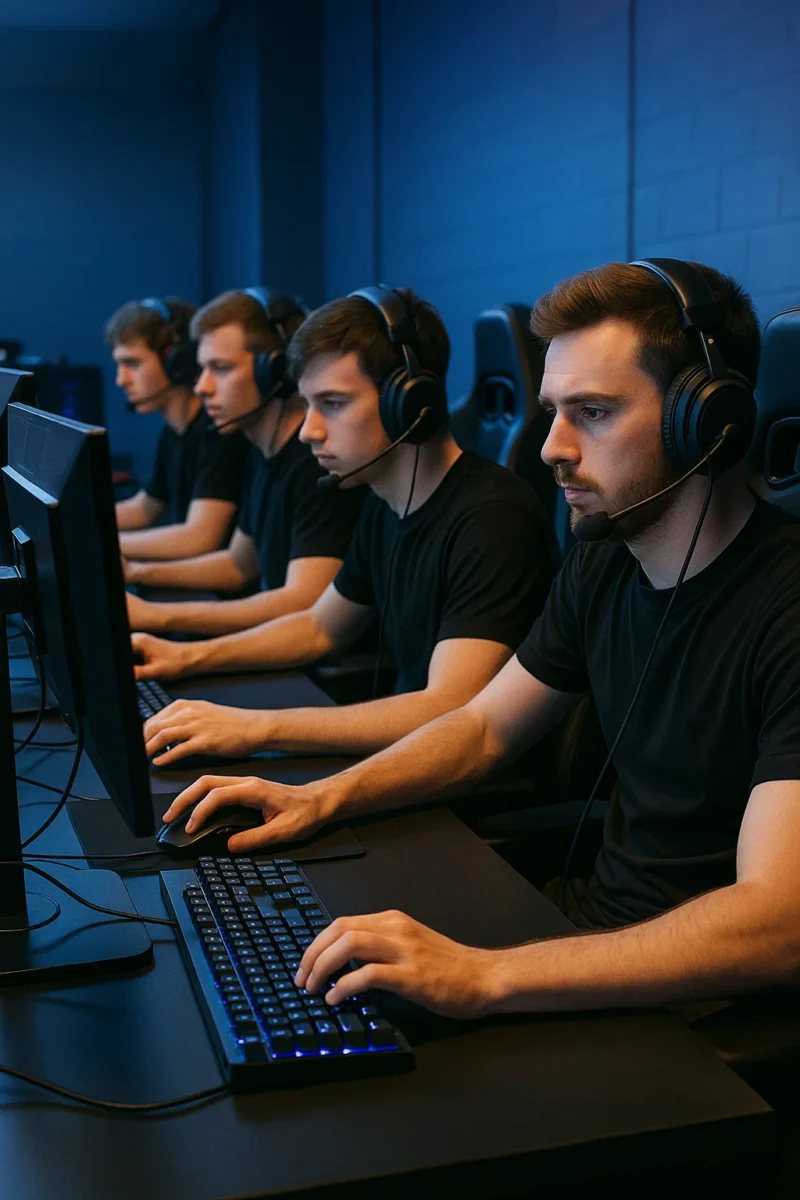
How to Find an Esports Team (Beginner’s Field Guide) Published / Last updated: November 10, 2025 If you’re wondering how to find an esports team, start here. This discovery guide shows where real teams recruit—school programs, collegiate leagues, local groups, and trusted LFG channels—plus what to post to get fast tryout invites. Part of our […]

How to Practice for Esports: A Simple Routine to Get Better Faster
How to Practice for Esports (Without Grinding All Day) One goal. Tiny drills. Small wins that stack. Works in any competitive game. Last updated: November 5, 2025 Part of our Esports Hub — learn how to join a team and enter tournaments. Image © Pexels — editorial use only How to Practice for Esports: A […]
How to Make Money Playing Video Games — 7 Real Ways (2025)
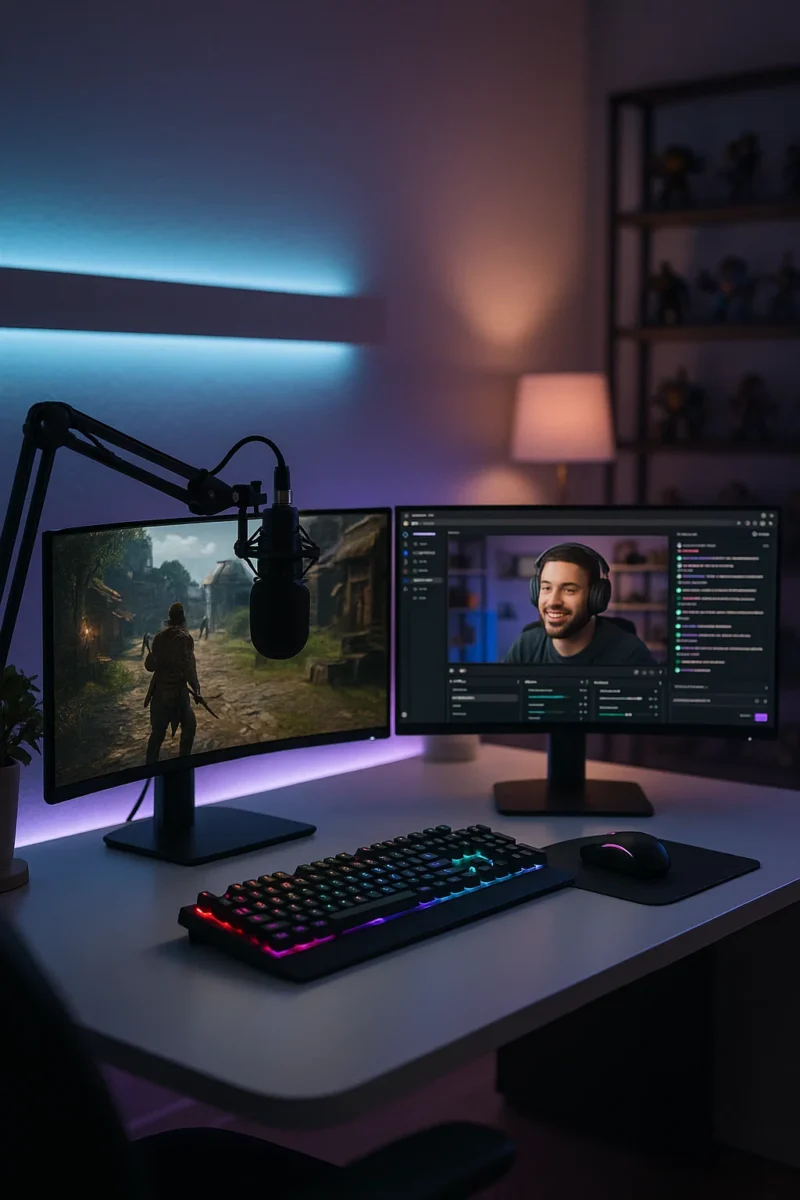
How to Make Money Playing Video Games — Real Ways Gamers Earn in 2025 If you’re asking how to make money playing video games, this guide gives you realistic paths, clear expectations, and a plan you can start this week. Last updated: November 11, 2025 Part of our Esports Hub — learn how to join […]

How to Join an Esports Team (Beginner’s Step-by-Step Guide)
Image © RDNE Stock project / Pexels — used under Pexels license for editorial coverage How to Join an Esports Team (Step-by-Step for Beginners) By Free Gaming Lounge • Last updated November 10, 2025 If you’re wondering how to join an esports team, the formula is simple: pick a lane, show consistent results, and make […]

How Esports Teams Make Money (2025 Guide)
Image © PNGtree — used for editorial coverage How Esports Teams Make Money (and Why It Matters to Players) By Free Gaming Lounge • Last updated November 11, 2025 How esports teams make money is one of the biggest questions new players, fans, and school clubs ask when they start taking competition seriously. Understanding where […]

Esports Terms A–Z: The Complete Beginner Glossary (FPS • MOBA • BR • FGC • Wargaming)
Image © Esports Kingdom — CC BY 2.0 — via Wikimedia Commons Esports Terms A–Z: The Complete Beginner Glossary (FPS • MOBA • BR • FGC • Wargaming) By Free Gaming Lounge • Last updated November 6, 2025 This esports terms glossary gives clear, skimmable definitions for competitive FPS, MOBAs, battle royales, fighting games, Rocket […]

Utah Gaming & Esports Scholarships 2025: Amounts, Deadlines, and How to Apply
Utah Gaming & Esports Scholarships (2025): Amounts, Deadlines, How to Apply By Tooele Free Gaming Lounge • Last updated November 6, 2025 Looking for Utah gaming scholarships or Utah esports scholarships? This guide lists the best in-state options (University of Utah, Weber State, SLCC) plus national awards open to Utah students, with clear requirements and […]
How to Enter Online Gaming Tournaments
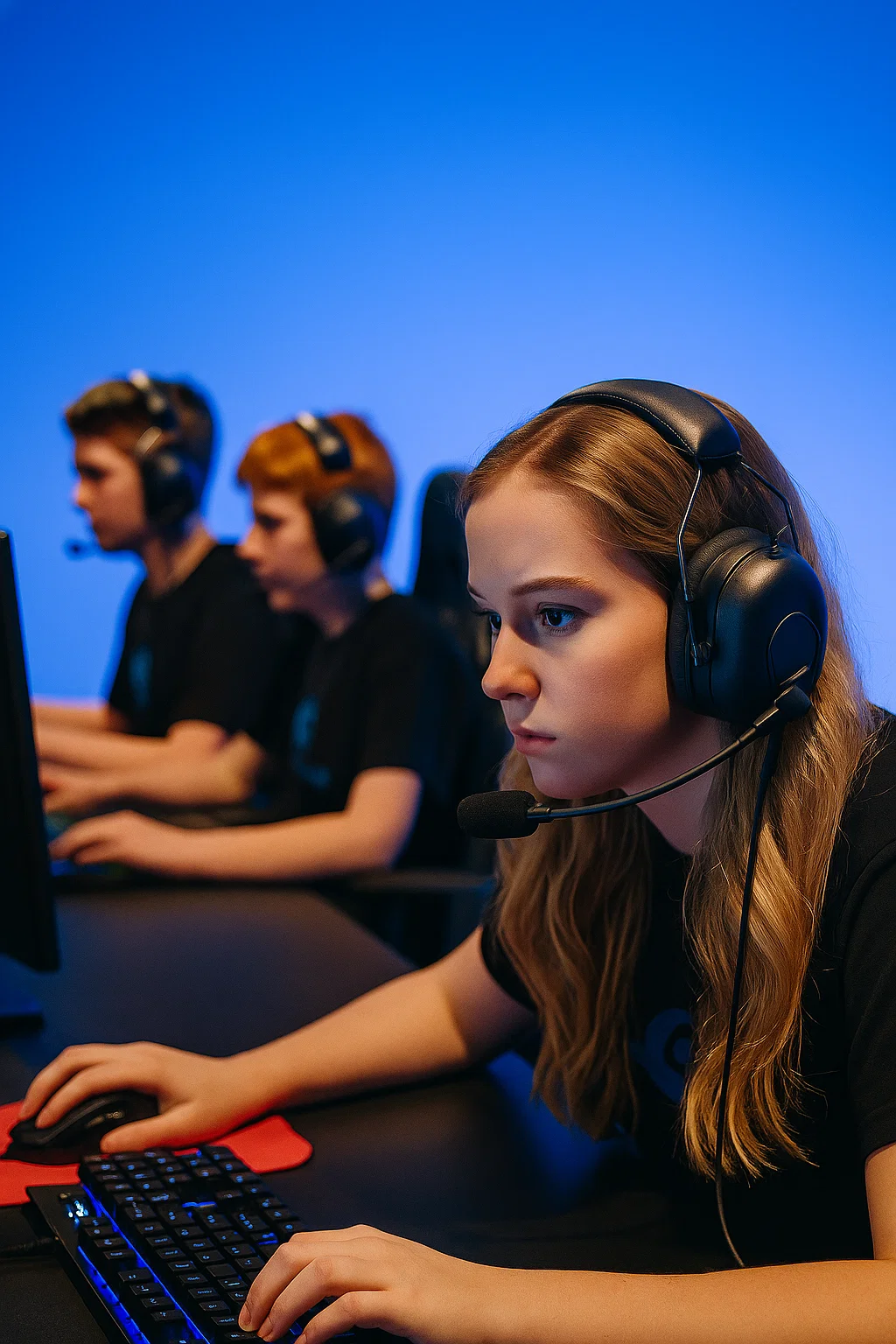
How to Enter Online Gaming Tournaments (Beginner-Friendly Guide) If you’ve been wondering how to enter online gaming tournaments, the process is straightforward once you know where to look and what to expect. This guide focuses on legit platforms with public rules, visible brackets, and transparent prizing so you can jump in without guesswork. Last updated: […]
Top 15 Esports Games by Prize Money in 2025
Image © Free Gaming Lounge — used for editorial coverage Top Esports Games 2025 by Prize Money — Biggest Prize Pools Ranked Last updated: Nov 13, 2025 YTD This updated ranking of the top esports games by prize money 2025 shows the biggest esports prize pools across official tournaments only, with totals listed in USD […]